
Dementia Care at Home in Hampshire
Familiar rooms, familiar routines and familiar faces. For someone living with dementia, staying at home is often the kindest thing possible.
- Consistent Carers
- Nurse-Led
- CQC Rated Good
- Serving Hampshire Since 2013

CQC rated GoodNurse-led since 2013
Why Home Matters So Much With Dementia
With most conditions, the surroundings are incidental. With dementia they are part of the treatment.
A familiar home carries memory in a way that a new room cannot. The route to the bathroom is already known. The light through a particular window means morning. The chair by the fire has been the same chair for forty years. Moving someone away from all of that often causes a decline that the move itself was meant to prevent.
That is why we build dementia care around continuity above everything else. The same small team, the same routine, the same order of the day. It is not a complicated idea, but it takes real effort to deliver properly, and it is the difference between care that settles someone and care that unsettles them.
Support at Every Stage
Early stage
A few hours a week can be enough. Prompting with medication, help with shopping and appointments, company and a gentle eye on how things are going. Starting early also means the carer is a familiar face before dementia makes new faces difficult.
Middle stage
Daily support with washing, dressing, meals and medication, alongside help managing confusion, repetition and changes in mood. Routine becomes the anchor, and families usually need practical support of their own by this point.
Later stage
Full personal care, mobility and continence support, help with eating and drinking, and often live-in or 24 hour cover. Nurse-led oversight matters most here, as physical health needs increase alongside the dementia.
What Our Dementia Care Includes
Routine and orientation
Keeping the day in a familiar order, gentle prompting, help with time and place, and a calm response when the same question comes for the tenth time.
Personal care with dignity
Washing, dressing, toileting and continence support delivered patiently, at the person's pace, in a way that protects self-respect.
Health and medication
Medication administration and prompting, monitoring appetite, hydration, sleep and mood, and escalating changes to our nursing team the same day.
Meaning and connection
Music, photographs, familiar activities, walks, conversation about the past. The things that reach someone when recent memory does not.
The People Who Come Into the Home
Dementia care asks something specific of a carer. Patience that does not run out, an instinct for when to prompt and when to leave something alone, and the ability to step into someone's version of the moment rather than correcting it.
We recruit for that temperament and then train for the rest. Every carer is fully referenced, DBS checked and trained to the Care Certificate, with dementia-specific training completed before working alone.
Matching then matters more than scheduling. We introduce carers properly rather than sending someone unannounced, and we keep the team as small as the package allows. When a new face is unavoidable, we overlap them with a familiar one first.
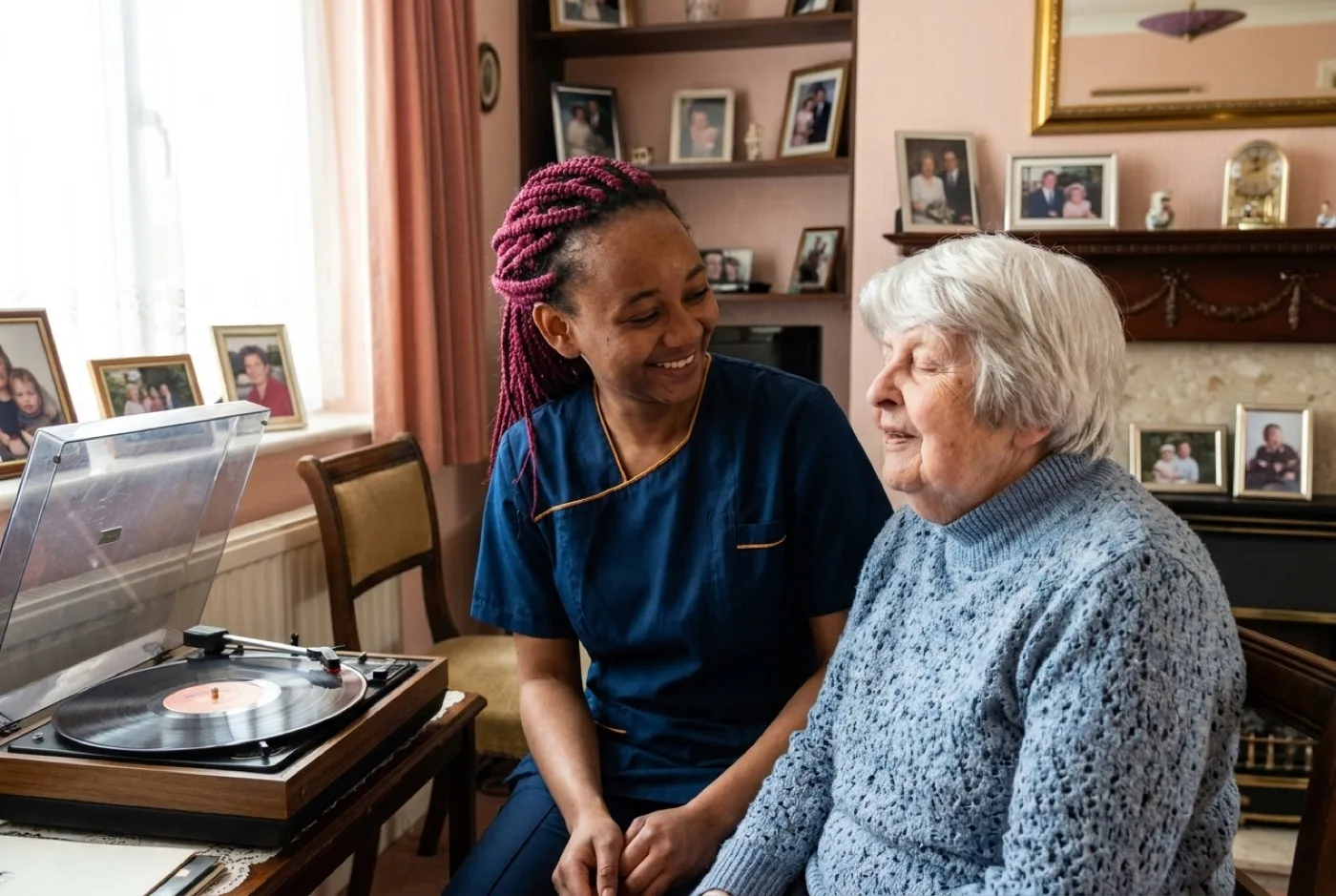
You Are Allowed to Need Help Too
Most people caring for a partner or parent with dementia carry on far longer than they should, because stopping feels like failing. It is not.
Bringing in support does not take the relationship away. It usually gives it back. When someone else handles the washing, the medication and the difficult mornings, a daughter gets to be a daughter again rather than a carer running on empty.
We can start small, with a few hours a week, and build only as far as is genuinely needed. We can also provide respite so a family carer can sleep, recover or go away without worrying about what they are leaving behind.
Getting Started
Talk to us
Call 01420 551309 and describe what is happening. You do not need a diagnosis or the right words for it.
Free assessment at home
We meet the person needing care in their own surroundings, at the best time of day for them, and talk with the family about routine, history and what makes a good day.
Matching and introduction
We propose carers and introduce them properly, so the first visit is not a stranger at the door.
Care begins, and adapts
Dementia changes. We review regularly and adjust the plan, in either direction.
Paying for Dementia Care
Self-funding
You arrange and pay directly. We provide a written rate sheet before care begins and give at least thirty days notice of any change.
Local authority and direct payments
Hampshire County Council may contribute after a needs and financial assessment. Direct payments let you choose your own provider. Attendance Allowance is not means tested and is worth checking early.
NHS funded care
Continuing Healthcare and Funded Nursing Care can apply where needs become primarily health related, which happens more often in later stage dementia than families expect.
Frequently Asked Questions
My mother says she does not need or want help. What do we do?
This is the most common call we take. We start gently, often framing the visits as company or help around the house rather than care, and we build trust before anything else. Resistance usually softens once the carer is a familiar person rather than an idea.
Will she see the same carer each time?
That is the whole point of how we build dementia packages. We keep the team as small as the hours allow, and we overlap a new carer with a familiar one before they visit alone.
Is a care home not safer at this stage?
Sometimes it is, and we will say so honestly if we think it. But for many people a familiar home with the right support is both safer and kinder, particularly where a move would cause significant distress.
What happens when things get worse at night?
We can increase to live-in care or to 24 hour care with a waking night carer. Night-time waking, wandering and distress are exactly what those services exist for.
Can you help if we live far away?
Yes, and many of our enquiries come from families living hours away. We keep you updated with consent, and you have a 24 hour office to call rather than a voicemail.
Do you need a formal diagnosis before starting?
No. Many families come to us while they are still waiting for a memory clinic appointment.
Send an Enquiry
You do not need a diagnosis, a plan or the right words. Tell us what is happening at home and we will help you work out what would actually help.
We reply within 24 hours, and the same day for urgent enquiries.
Talk to Someone Who Understands Dementia
You do not need a diagnosis, a plan or the right words. Tell us what is happening at home and we will help you work out what would actually help.
01420 55130907717 495533admin@kariscareservices.co.uk
We reply within 24 hours, and the same day for urgent enquiries.